Sheffield has two Football League clubs and one derby. The Steel City Derby between Sheffield Wednesday and Sheffield United is one of the older local fixtures in English football, and its geography is as important as its history. The two clubs are separated not by a river, as in Liverpool, or by a symbolic line, as in Manchester, but by a very specific set of postcodes that map onto the social and physical topography of the city in ways that were set in the late Victorian period and have not fundamentally changed since.
Wednesday: Hillsborough and the North-West
Sheffield Wednesday play at Hillsborough, in the Owlerton district in the north-west of the city. The ground has been their home since 1899, when the club left their previous home at Olive Grove in the south of the city after problems with their lease. The move to Hillsborough placed the club in the working-class communities of the Don Valley’s western edges: Hillsborough, Malin Bridge, Walkley, Oughtibridge. These were communities with employment in the cutlery and light metal trades, in the smaller workshops that sat outside the heavy steel industry concentrated further east.
Wednesday, formed in 1867 by members of the Sheffield Wednesday Cricket Club as a winter activity, are the older of the two clubs. The cricket club connection gave them their name and their early social base among the middle-class sporting enthusiasts of the period. By the time they moved to Hillsborough, the club had won three league championships and two FA Cups. Their history in the first forty years of professional football was one of genuine achievement at the top level.
United: Bramall Lane and the South
Sheffield United play at Bramall Lane, a ground that predates the club itself. Bramall Lane had been a cricket ground from the 1850s and hosted Yorkshire and All-England matches before football was introduced to the site. Sheffield United were formed in 1889 specifically to play football at Bramall Lane, which was by then looking for year-round use. The cricket ground stood in the Highfield and Sharrow area, south of the city centre, in communities with different employment patterns from the north-west: the heavy steel rolling mills and foundries of the Don Valley were close, as were the cutlery and silversmithing workshops of the Sheaf Valley.
United’s formation in 1889, twenty-two years after Wednesday, and their immediate admission to the Football League placed them in competition with an already-established local rival. The first competitive meeting between the two clubs in a Sheffield derby came in 1890. The rivalry has continued at various levels of the football pyramid since, including periods when the two clubs have been in different divisions and the fixture has not been possible.
The Geography of Allegiance
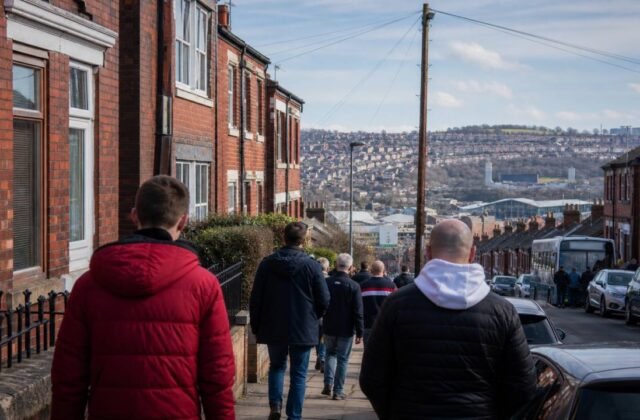
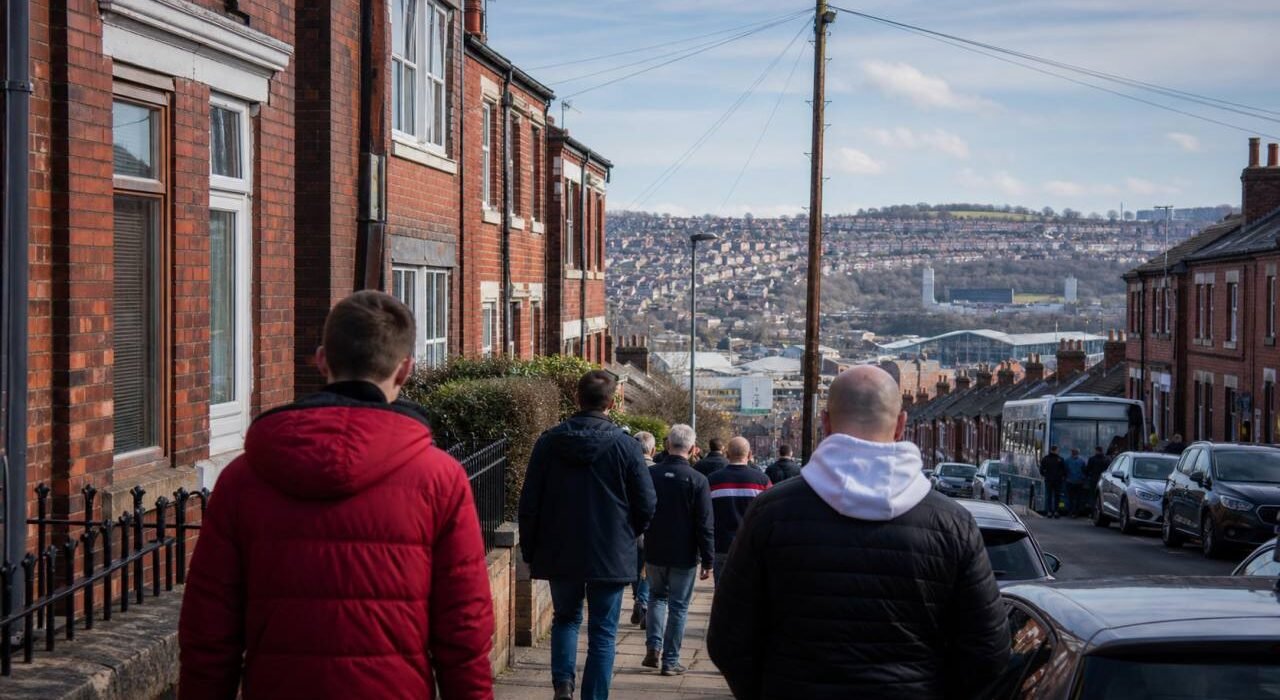
The division between Wednesday and United support in Sheffield is primarily geographical, though the relationship between geography and support has blurred over generations as the city has changed. The broad pattern – Wednesday in the north and west, United in the south and east – still holds as a rough guide, but the exceptions are numerous and the city’s internal migration over a century has mixed the populations considerably. Many Sheffield families contain both allegiances.
What makes the Steel City Derby distinct from some other local rivalries is the absence of the religious, ethnic, or class distinctions that define derbies like Celtic versus Rangers or Millwall versus West Ham. The Sheffield derby is, at its root, a matter of which side of town you grew up on and which ground your father took you to first. The passion is genuine – it is a derby, and derbies produce emotion regardless of the theoretical stakes – but the underlying division is one of civic geography rather than deeper social fracture.
Corrections
Spotted something wrong? Send a correction.