

The Dale Dyke reservoir above the Loxley Valley was one of the largest artificial water bodies in England when it was completed in early 1864. It had been constructed by the Sheffield Waterworks Company to supply the rapidly expanding industrial city below. On the evening of 11 March 1864, a crack appeared in the embankment. By midnight, the dam had failed. The consequences were catastrophic.
The Collapse
The Dale Dyke embankment was an earthen dam approximately 95 feet high, holding back approximately 700 million gallons of water. When the crack was discovered on the evening of 11 March, the waterworks company engineer John Gunson was summoned and arrived to inspect it. He judged it manageable. He was wrong. Shortly before midnight, the embankment failed along its full width. The water that had been impounded behind it was released in a wave that moved down the Loxley Valley at speeds estimated between ten and fifteen miles per hour.
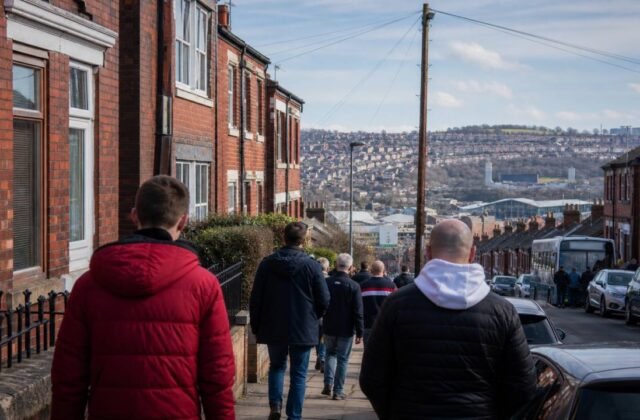
The valley below the dam was not empty. The Loxley was an industrial river, lined with grinding wheels, forges, mills, and the worker housing associated with them. The communities of Low Bradfield, Damflask, Loxley, Malin Bridge, Hillsborough, and Owlerton were all directly in the path of the flood. The wave hit Malin Bridge at around one in the morning. At that hour, residents were asleep. The warning time, from those who had seen the flood coming down the valley and ran ahead of it, was measured in minutes at most.
The Destruction
By the time the water reached Sheffield’s Don Valley and spread across the city, 270 people were dead. The figure is probably an undercount. Houses, workshops, and mills had been demolished. Bridges were gone. The lower reaches of the Loxley and the Don were littered with debris: timber, machinery, furniture, bodies. Some bodies were not recovered for days. A few were never formally identified.
The financial damage was estimated at approximately half a million pounds, a vast sum in 1864. The Sheffield Waterworks Company was held liable through an Act of Parliament that compelled them to compensate those affected. The compensation process was slow, contested, and left many of the poorest victims – the workers in the valley bottom cottages – with inadequate recompense for what they had lost. The middle-class property owners in the city fared better through the legal process than the working families who had been in the direct path of the flood.
The Inquiry and Aftermath
A formal inquiry examined the causes of the failure. The conclusion was that the embankment had been inadequately compacted during construction, leaving a weak zone through which the water eventually found a path. The engineering failure was real but the inquiry also noted that the inspection and decision-making on the night of the failure had been inadequate. John Gunson, who had judged the crack manageable, bore some of the moral weight of the outcome without facing formal prosecution.
Dale Dyke was rebuilt on a new alignment and filled again. It stands today as a reservoir on the moors above the Loxley Valley, largely unknown to most Sheffield residents. The flood is commemorated with a modest memorial in Low Bradfield. The valley has absorbed what happened there: new housing, a nature reserve at Damflask, the grinding wheels now mostly historical curiosities rather than working mills. The 270 dead are a number rather than names to most of the city that their deaths helped shape.
Corrections
Spotted something wrong? Send a correction.