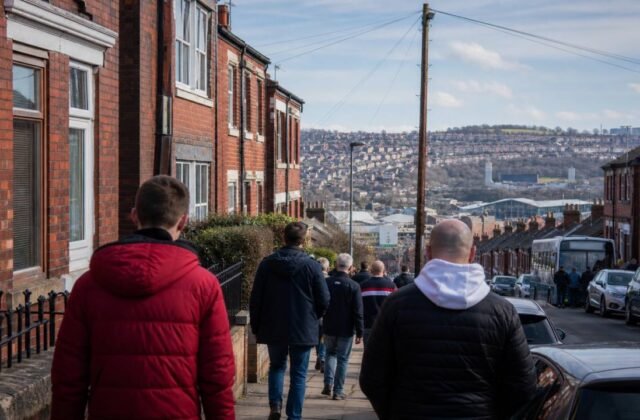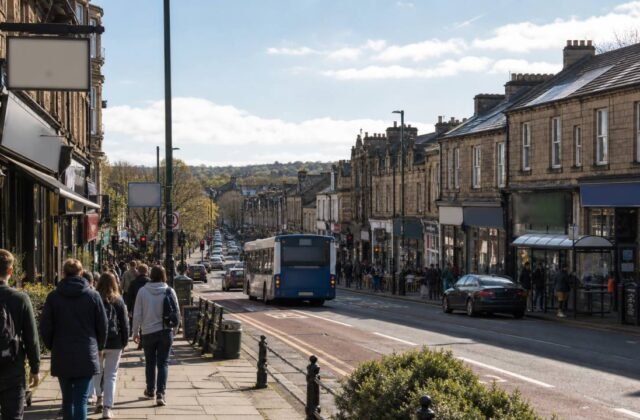


Sheffield steel is one of those phrases that contains an entire history. The city’s relationship with iron and steel goes back to the medieval period – the River Don and its tributaries powered grinding wheels from the twelfth century, and by the sixteenth century Sheffield was already synonymous with cutlery and edge tools across Europe. When Abraham Darby and Benjamin Huntsman refined industrial steel production in the eighteenth century, Sheffield was positioned to become the capital of the material that would build the modern world.
The Victorian Sheffield that steel built was extraordinary and terrible in equal measure. The East End – the Lower Don Valley, Attercliffe, Brightside – became the most concentrated steel-producing zone in the world. Bessemer converters lit the sky at night. The Don Valley was a continuous belt of furnaces, rolling mills, and workshops from the city centre to Rotherham. The noise was incessant. The pollution was biblical. The workers who operated the machinery did so in conditions that shortened their lives and hardened everything about them.
Sheffield made the cutlery for the world’s dinner tables. It made the rails for the world’s railways. It made the armaments for the world’s wars – during both World Wars the city’s capacity for specialist steel made it a target, and the December Blitz of 1940 damaged large parts of the East End. The Kelham Island Museum preserves the machinery and the memory of what the industry looked like at its peak – the River Don Engine, 12,000 horsepower of rolling mill drive, is the most potent single object in Sheffield’s industrial museum.
The collapse came fast. Import competition from cheaper-labour economies in East Asia, the structural inefficiency of British industrial organisation, the Thatcher government’s refusal to intervene – all contributed to a steel industry implosion across the 1970s and 1980s that was one of the most rapid deindustrialisations in modern British history. The East End emptied. The valley floor, which had been continuous industry for two hundred years, became grassland and waste ground almost overnight. Twenty years of employment, identity, and community structure dissolved in less than a decade.
What remained was legacy. The Sheffield cutlery brands that survived moved to smaller, specialised operations making high-quality knives and tools for premium markets – Stanley, Wostenholm, the remaining craftspeople. The Kelham Island Museum opened in 1982 in a generating station that was still surrounded by working industry; by the time the museum became Sheffield’s most-visited attraction, the industry around it was gone. The Don Valley was eventually redeveloped as a retail and leisure zone, the Meadowhall shopping centre opening in 1990 in the shell of a former steelworks.
Sheffield still makes steel. Outokumpu operates the largest stainless steel plant in Britain at Brinsworth. Special Metals, Sheffield Forgemasters, and a cluster of specialist manufacturers keep the city in the global steel supply chain for the applications where Sheffield expertise remains irreplaceable – aerospace, defence, nuclear, medical. It is not the mass employment industry it was. It is still, in its leaner and more specialised form, what Sheffield is made of.
Corrections
Spotted something wrong? Send a correction.